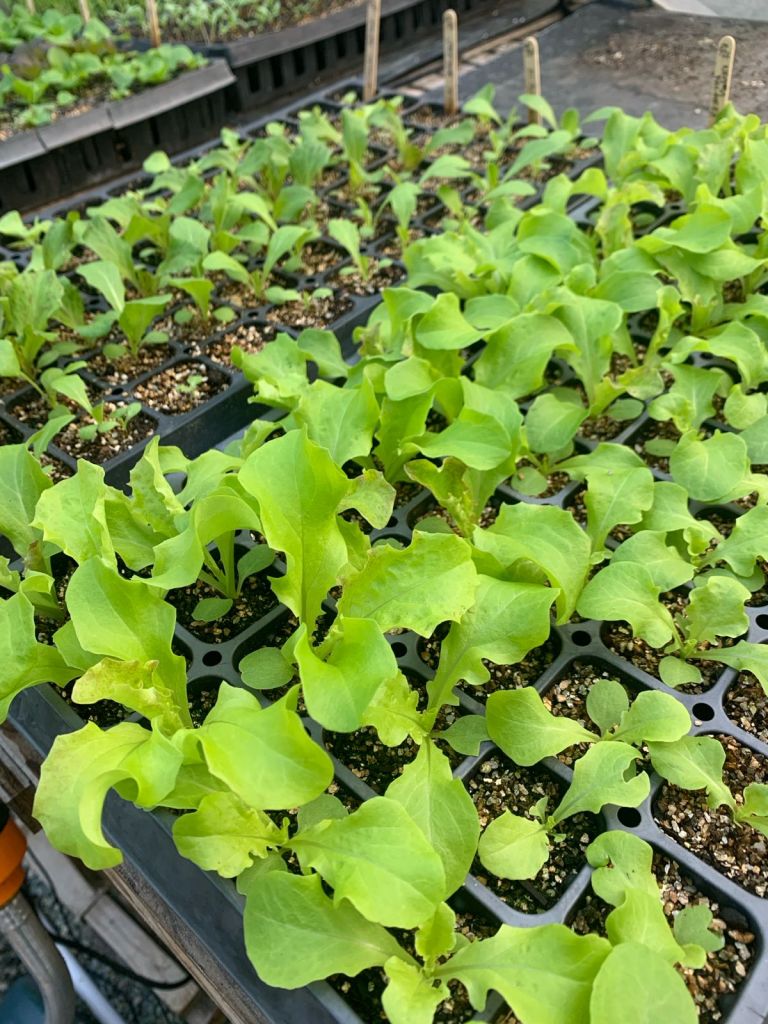
Last long weekend of the summer ended, school started, Toronto Blue Jays fights for playoffs, and NHL will start their season in a few weeks. All indicate our prime growing season is ending, but our garden is still full of greens. There are trays of lettuces that we need to transplant for fall and early winter (hopefully) harvest and we are seeding Komatsuna, Mizuna and Shungiku every week.
I am harvesting potatoes weekly for markets, and empty beds after harvest are converted to lettuce and Komatsuna beds. A few weeks ago I thought Suyo cucumber season was finishing as their leaves were turning yellow and their fruits were getting smaller. As an experiment, I gave them a little bit of organic fertilizer last week and the effect was noticeable! They started to produce larger fruits again. Fortunately, the forecast says next week or so may be warm, so I hope we can continue to bring tasty cucumbers to the markets for a few more weeks.
Another experiment I have been doing is Komatsuna. The photo below shows two different varieties of Komatsuda seeded on the same day with the same potting soil and left side by side in our propagation shed a few weeks ago. There is noticeable difference in their growing speed, colour of the leaves and stems.
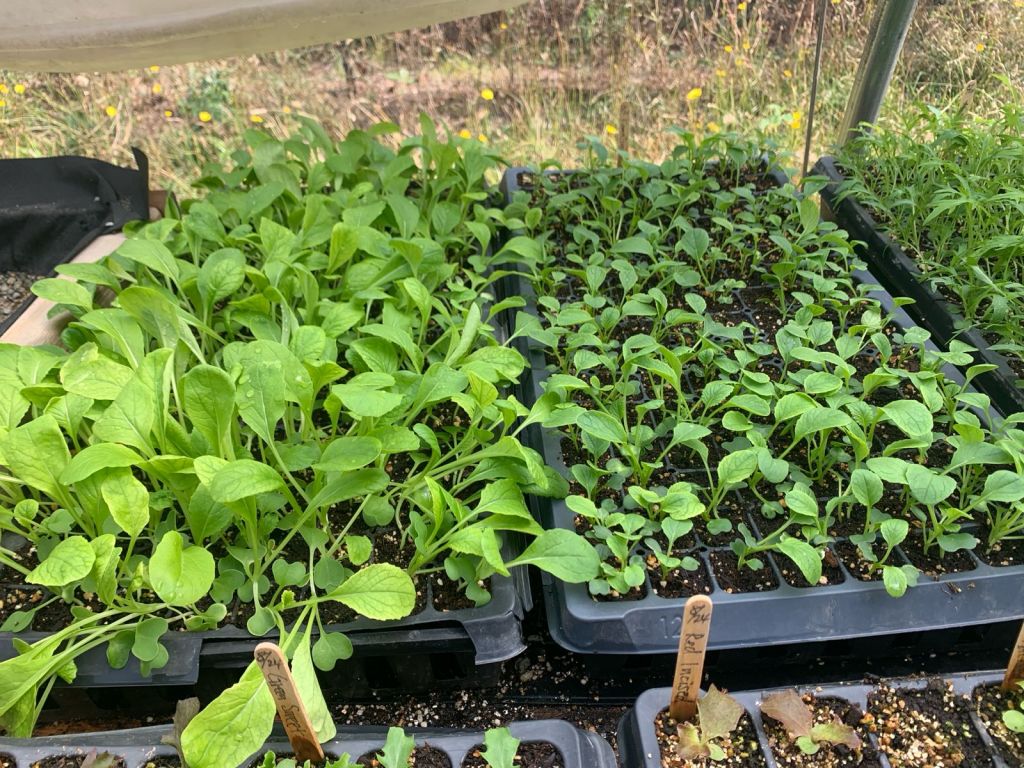
The one on the left is an open pollinated variety and ready to be planted outside. The one on the right is F1 variety and they are much smaller and not ready for transplant yet. They are from two different seed companies and I could not find the name of either variety. Several websites by Japanese seed companies suggest that F1 variety was developed to have stiffer stems and tall and vertically packed leaves so the packing process is easier compared to traditional open pollinated ones with more tender and horizontal plant shape. And they claim open pollinated varieties taste better. I will find out if their claim is true or not and let you know!
We grow and sell collard greens at the market and the original inspiration for this green was a Netflix show called “High on the hog”.
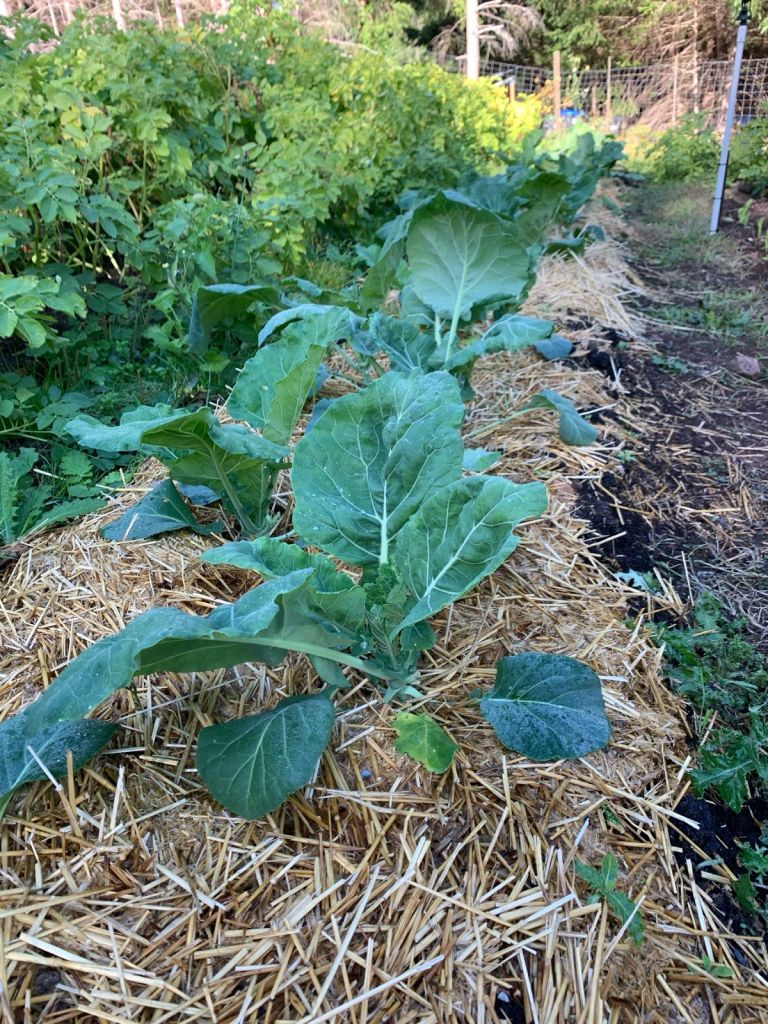
After I saw all the episodes of its first season, I borrowed a book with the same title by Dr. Jessica B. Harris which the show was based on, and found recipes with collard greens.
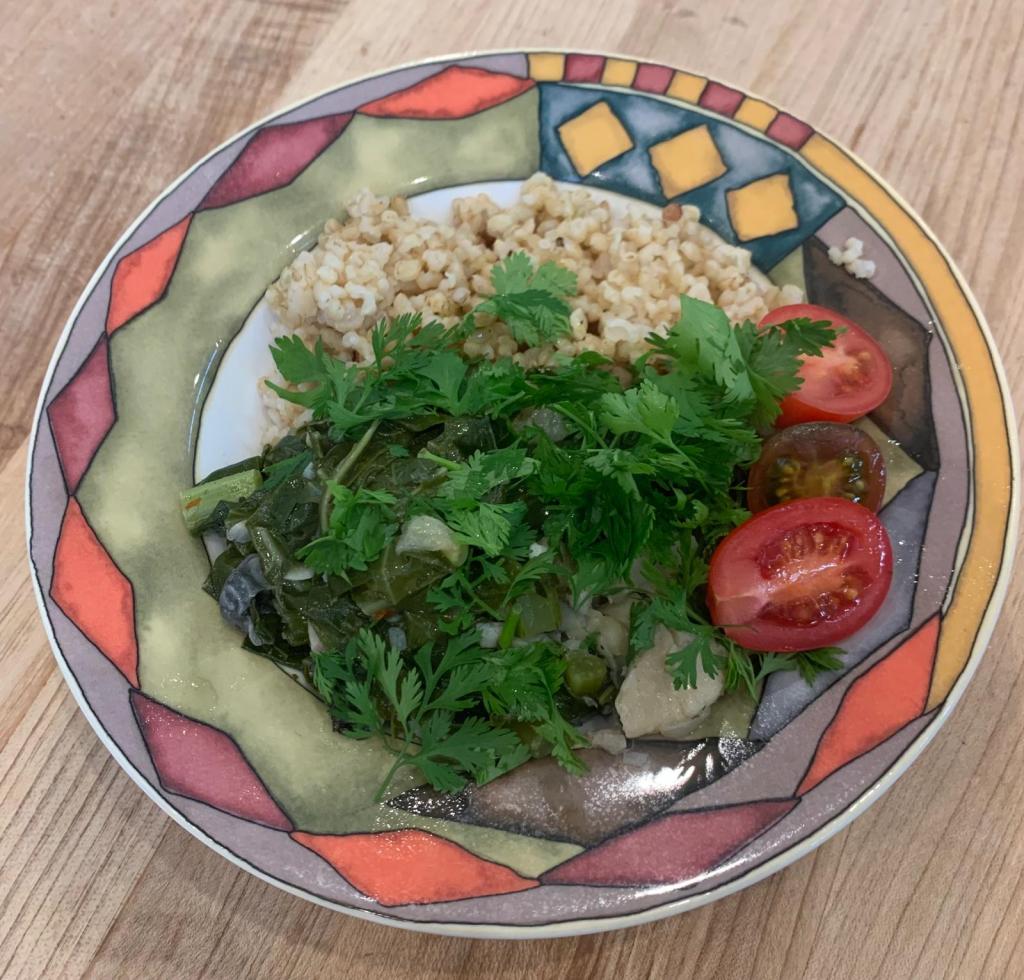
Collard greens thrive in the southern US where winter is mild, and became a staple green there when enslaved African American chefs cooked them as a replacement of various greens they would have used back at their home in African regions where greens in both cultivated and wild are available throughout the year. When collard greens are cooked long enough in a stew or soup with some meat or fish, even the tough stems become tender and go very well with steamed rice. You can season it on the table however you like, salty, sour or spicy. Since our second batch of regular collard as well as pilgrim cabbage varieties seems to be happily producing greens, I ordered the book to re-read and try more recipes. I will share them in the coming newsletters.
Which colour do you associate with fall season? For me it has been red. Day becomes shorter and we see more red sky at sunset, or the colour of red maple trees, which was in abundance around our neighbourhood in Ontario, where we lived for more than 20 years (in fact, name of the local public school was Red Maple PS!). Now living on the property with no red maple and lots of ever-greens, I have been wondering why I see sunlight’s colour was changing from bright summer white to somewhat nostalgic yellow recently and this afternoon finally understood while driving down on Fern Road on Gabriola it was because the light goes through yellowing regular maple canopies! While looking at splendid red fall colours at Ontario’s Algonquin Provincial Park was a fabulous experience, driving through green-yellow fall colour punctuated by blue ocean surrounding this island is a gorgeous experience, too.
Our market schedule is as follows:
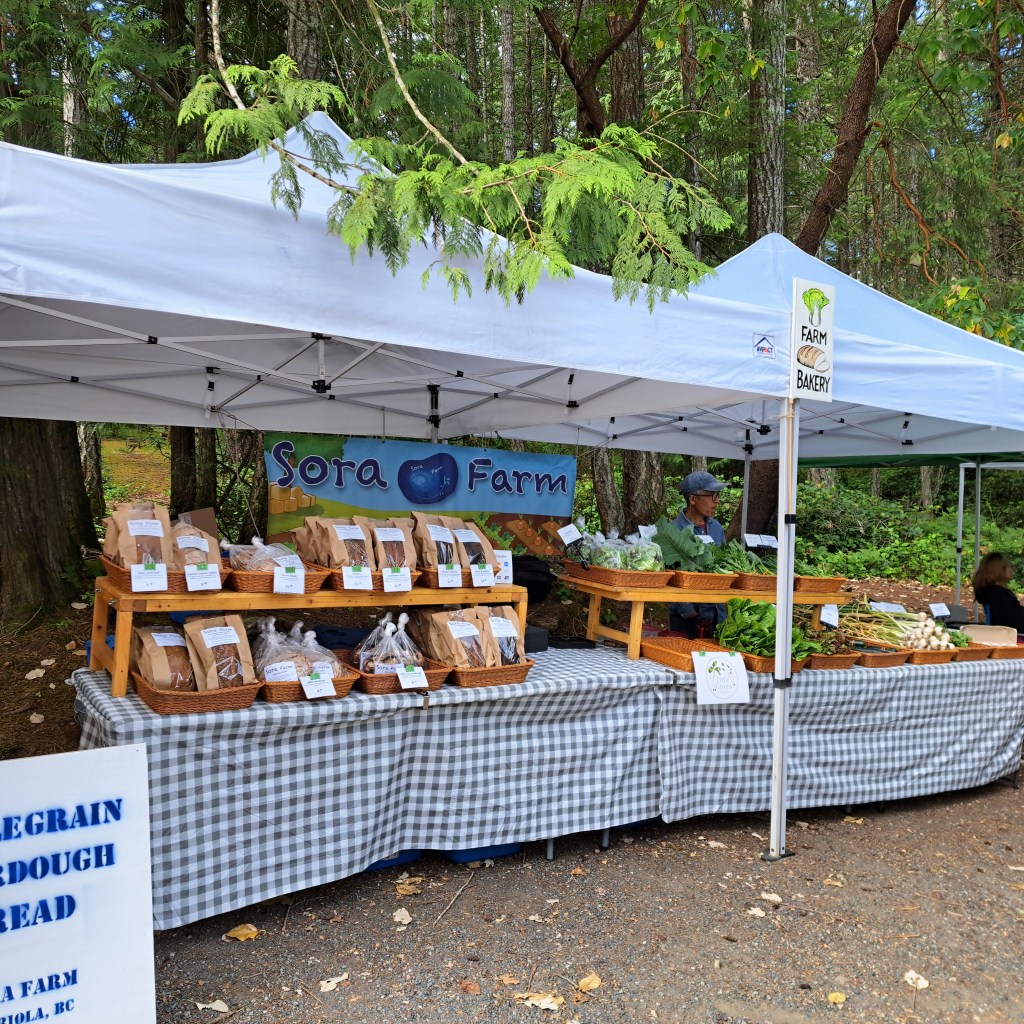
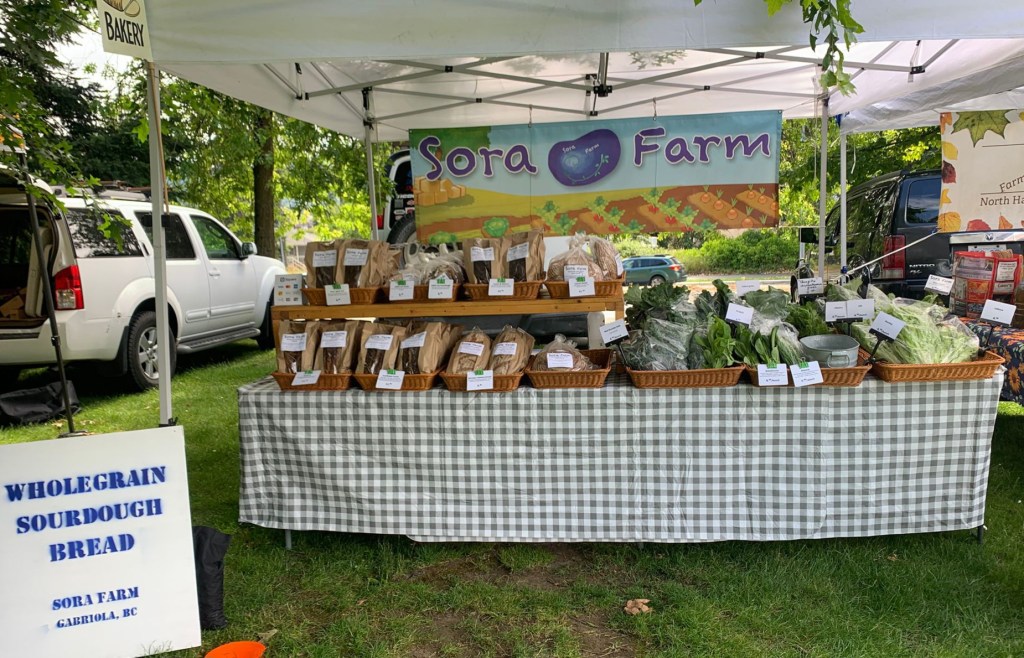
- Island Roots Farmers’ Market: Beban Park, 2300 Bowen Road, Nanaimo, 3 – 6pm on Wednesday
- AGI Market: AGI Hall, Gabriola, 10am – 2pm on Saturday
For pre-order of our sourdough bread, please click below and fill in the form, or send us an email to sorafarmveggie@gmail.com.
Thank you for your support and reading our newsletter. Have a wonderful week!
 Sora Farm