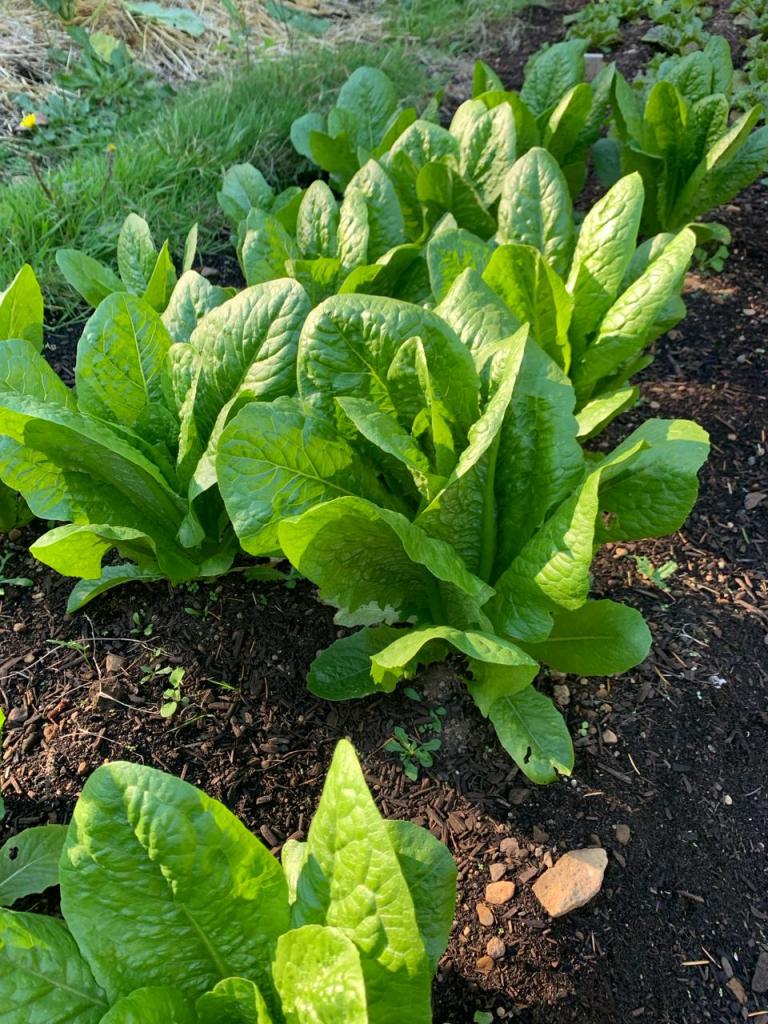
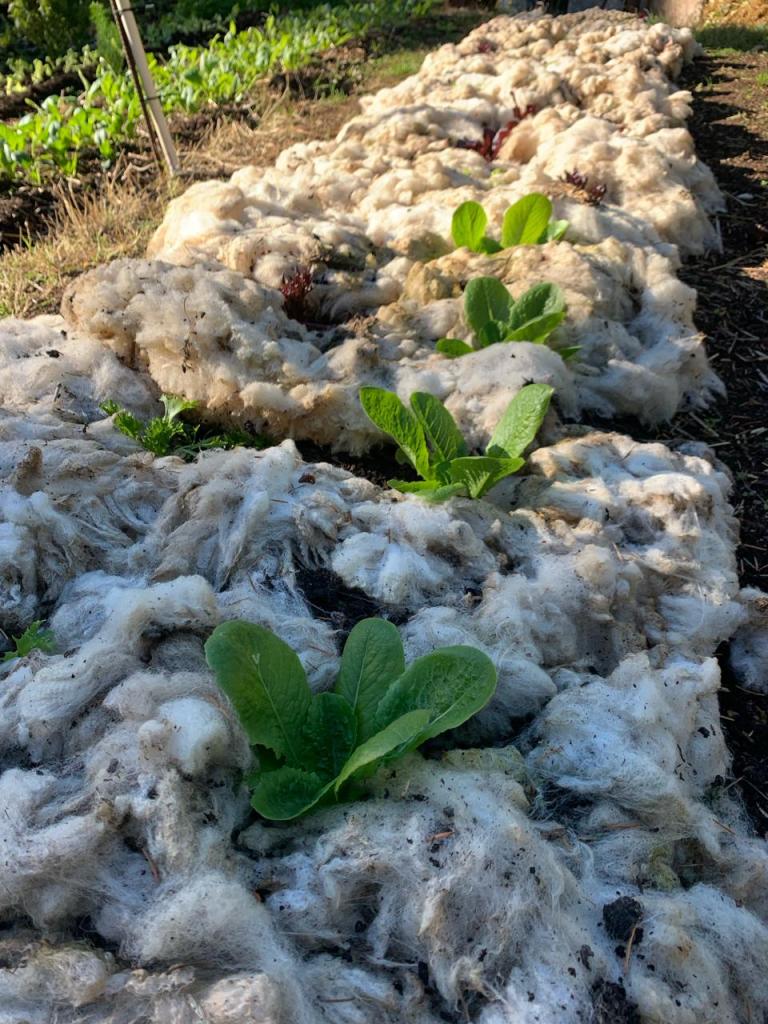
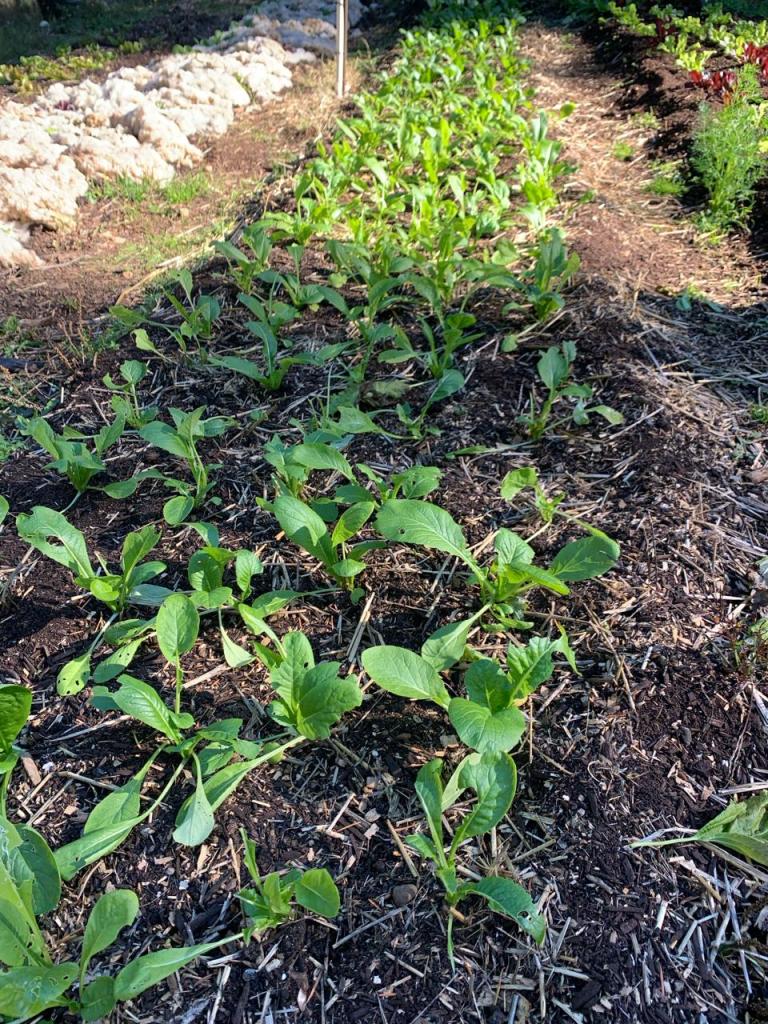
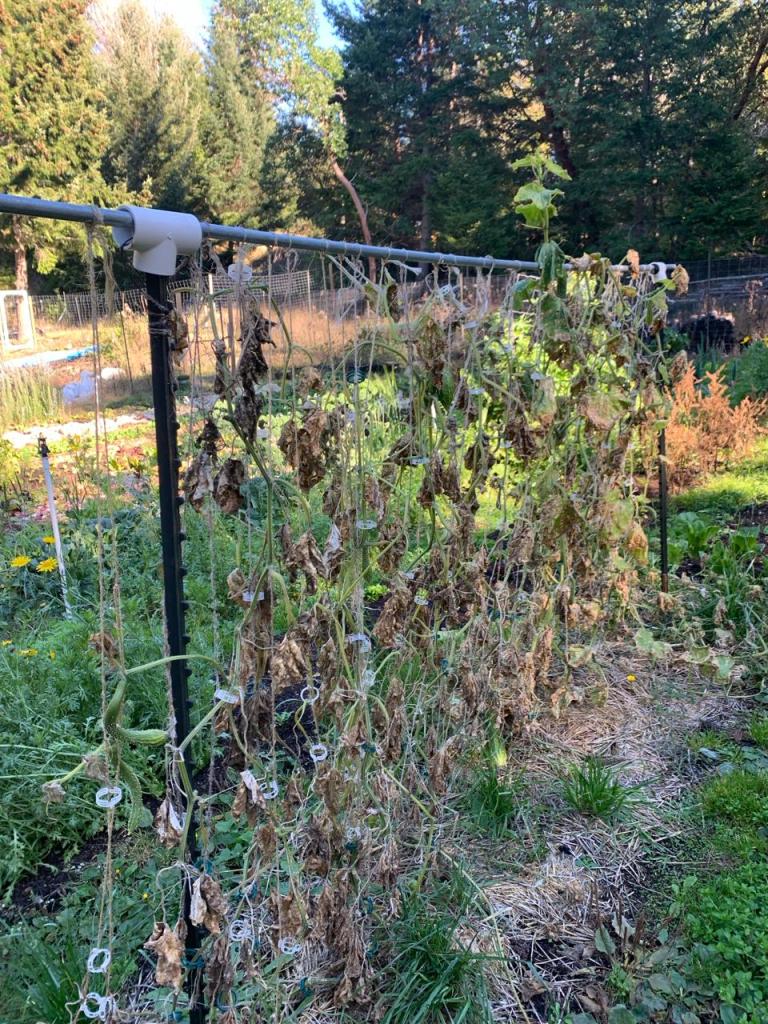
Our farm is now a mixture of browned, when-can-you-cleanup summer crops, and still growing die-hard greens. So far, frost has not arrived at our place and I hope I can still bring some greens to the market for a few more weeks. Fleece jackets keep human warm, so I decided to give them to our lettuce plants. Wool fleece helped our eggplants and I hope it will also help lettuce to grow in cooler fall temperature.
As daily farm activities wind down, I started to reflect what went right and wrong this year. We could bring our salad mix to the markets throughout summer months until just a few weeks ago. We had abundant cucumbers and egg plants. We missed planting carrot in both spring and fall, or our beets did not succeed this year. I hope in next season we can bring a little more varieties, and if at all possible restart either farm gate or farm stand sale for our neighbours!
In the meantime, we continue to harvest German butter potatoes weekly. We still have two more rows and will bring them to both Wednesday and Saturday markets. How do you cook potatoes? For me the most ubiquitous recipe is called “Nikujyaga” of which direct translation is “meat and potatoes”.
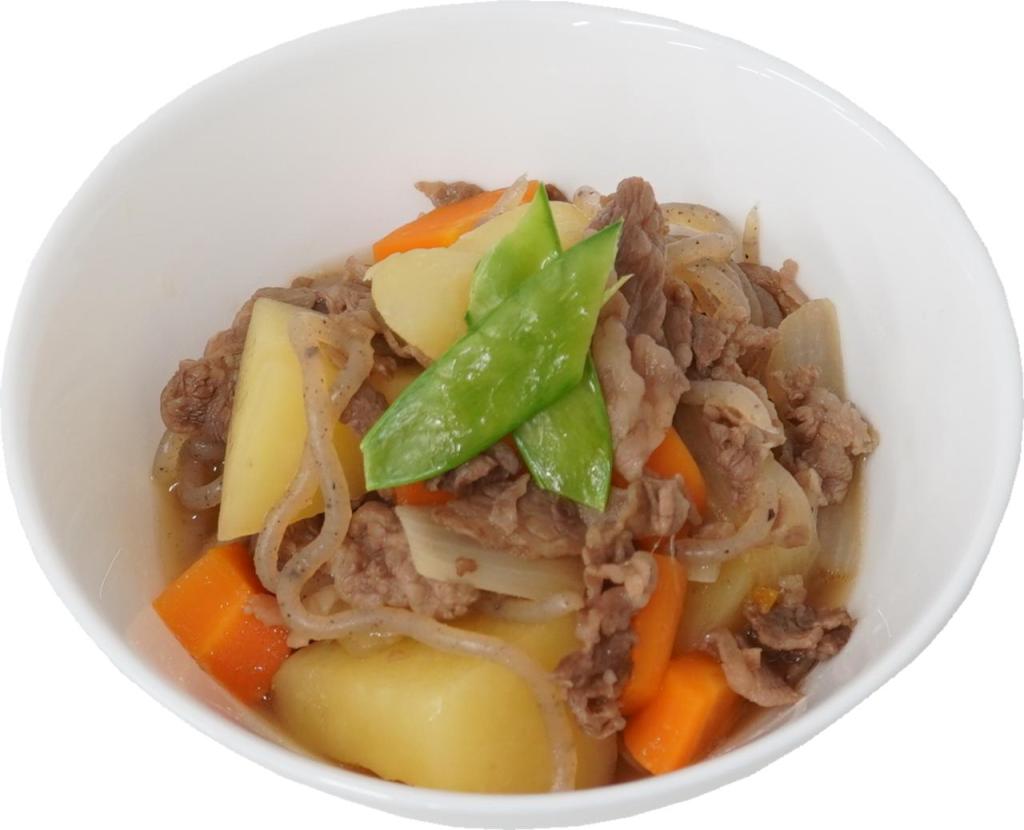
As far as I remember, this dish regularly appeared at our family dinner, so I thought it’s origin must go back a long time, but after a quick research I found it is not so old. It became a popular family dish in 1970’s when some magazines introduced the recipe. The original recipe was said to be created by a Navy chef, who was ordered by his commander to cook beef stew for him. This commander liked beef stew while studying in UK and missed it. It was around 1890 when red wine, which you need to make beef stew, was very hard to get in Japan. So the chef substituted red wine with soy sauce (which looks similar to red wine…), and cooked with sugar and sesame oil. The resulted dish must have looked like beef stew, but honestly it must have tasted very different! I wish I could see the reaction of that commander when he tasted the “beef stew”, but judging from that recipe survived for over 100 years, he must have liked his chef’s invention.
Interestingly, two cities in Japan, city of Kure and Maizuru are competing over which was the first Navy port where this recipe was invented. This commander was first assigned at Maizuru, and then moved to Kure. Original recipe note is preserved at Maizuru, so its citizens claim they are the one. Luckily, it is a very friendly competition and they jointly hold Nikujyaga festival. Here is the recipe. Please enjoy Nikujyaga with steamed rice!
Ingredients for 2 servings
Potatoes approx 300g
Thinly sliced beef 150g
1 x carrot
1 x medium cooking onion
2 x tbs sugar
2 x tbs soy sauce
200ml water
1 x tbs of sesame oil
– Heat oil in medium pan, sauté beef until slightly browed
– add potatoes, carrot and onion and sauté
– Add water, sugar, soysauce. Bring to boil, put a lid and cook for about 20 min, or until potatoes become soft
– Turn off heat and leave the pan for about 20~30 minutes before serving
Enjoy!
Wednesday market is indoor now. For Saturday market, we will be outside as long as weather cooperates, then will move inside. The hours and locations are as follows :
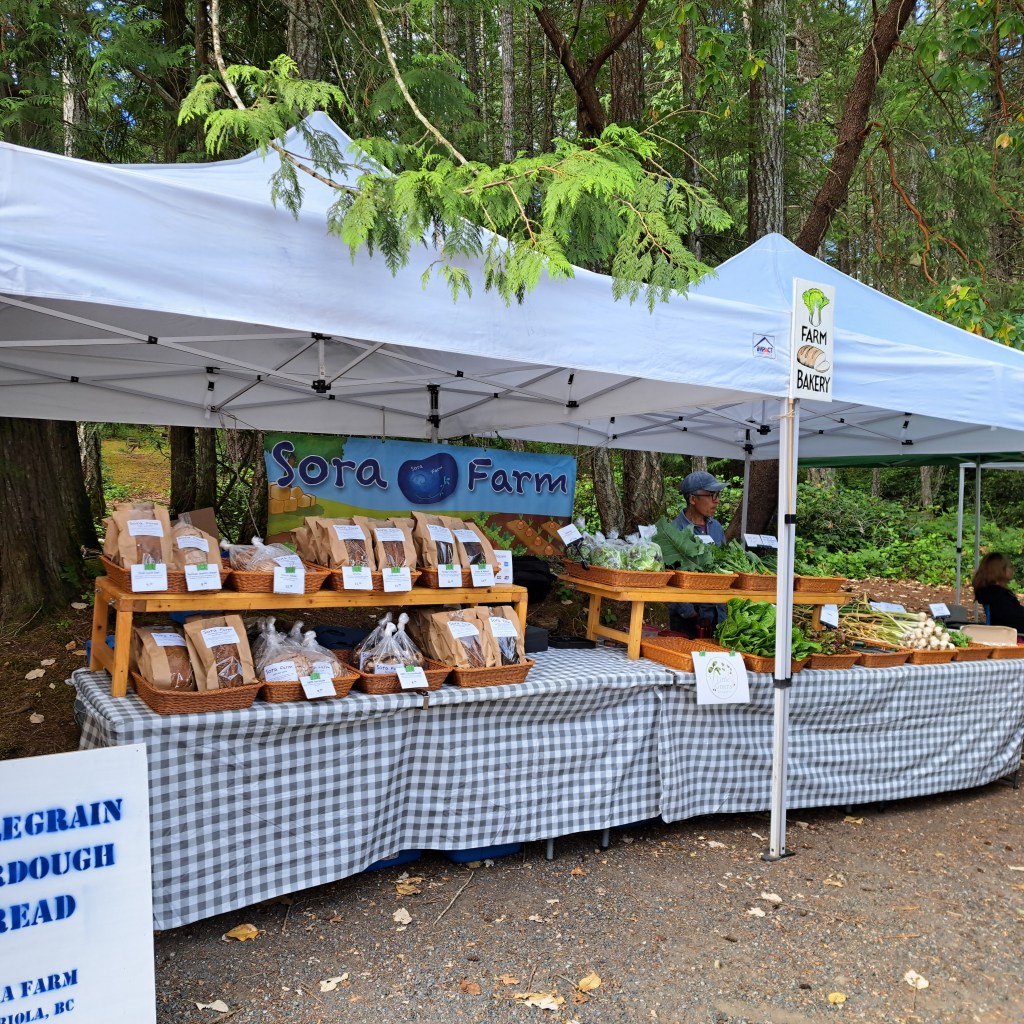
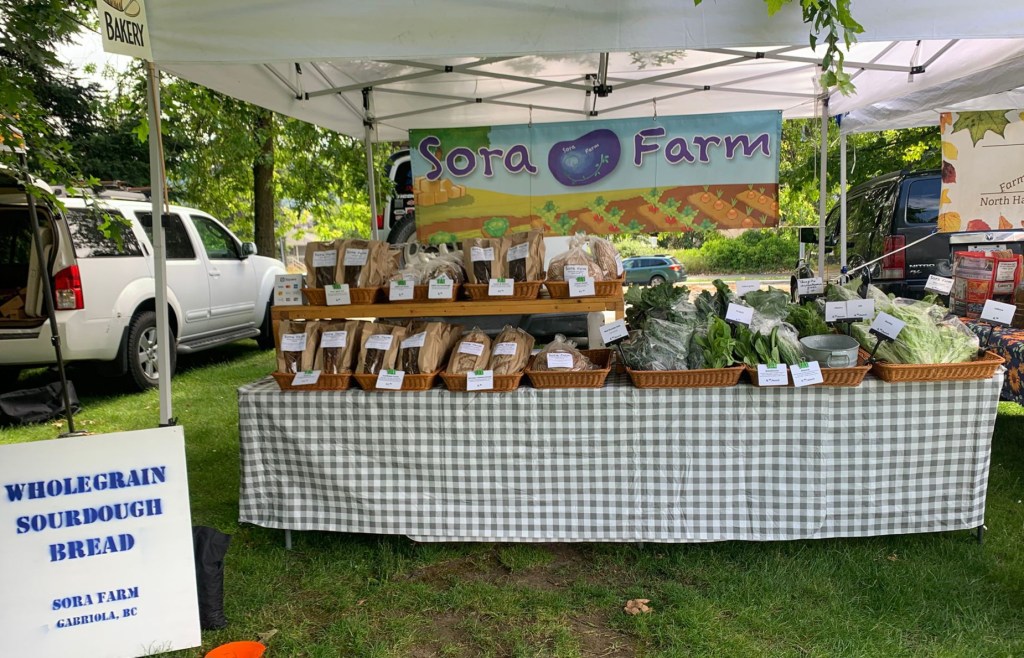
- Island Roots Farmers’ Market: Beban Park, 2300 Bowen Road, Nanaimo, 3 – 6pm on Wednesday
- AGI Market: AGI Hall, Gabriola, 10am – 1pm on Saturday
For pre-order of our sourdough bread, please click below and fill in the form, or send us an email to sorafarmveggie@gmail.com.
Thank you for reading our newsletter. Have a wonderful week!

