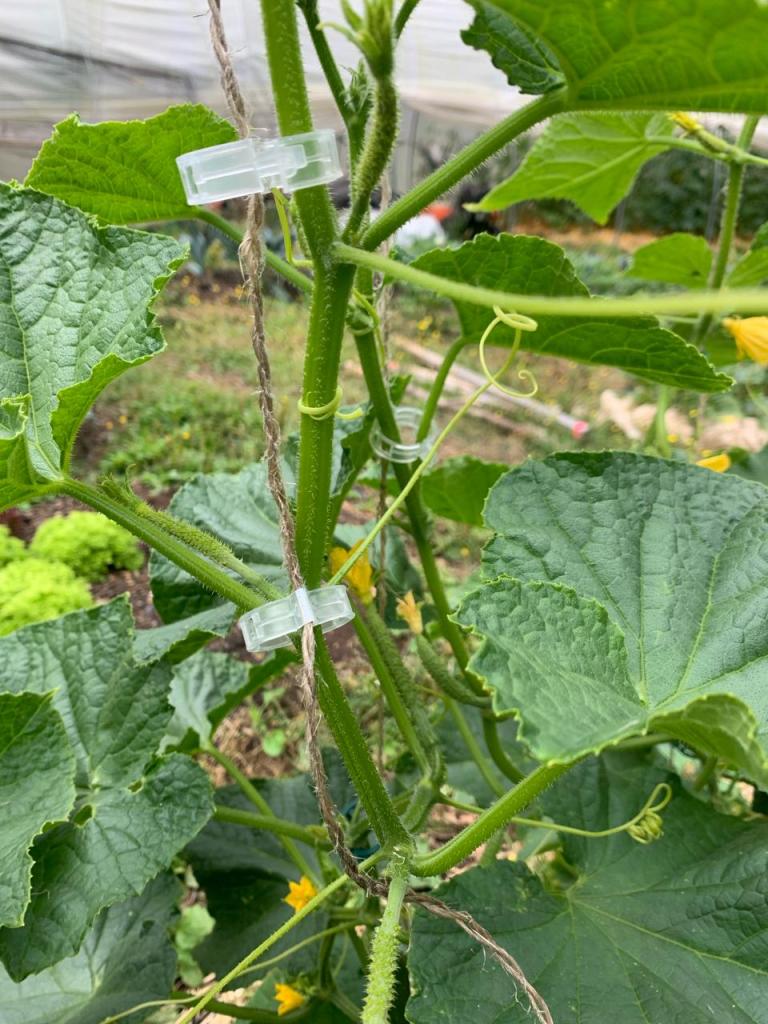
Have you touched the surface of cucumber leaves and felt fuzzy stuff on them? As we wrote before, we have Suyo Long cucumber plants both in greenhouse and outside. Those in greenhouse are growing faster and producing more fruits but outside ones also started to produce some in the past week, so I decided to see the difference beyond their sizes and fruit counts. The first thing I noticed was that outside cucumbers have stiffer and longer fuzzy things on their leaves. These hair-like outgrowth are called “trichomes” and they protect the plants from pests (tiny pests may find difficult to move around on fuzzy hair), prevent water evaporation from the leaves and work as natural shade clothes. Another difference is outside plants have stiffer and thicker stem than greenhouse ones, presumably, to resist more to wind. All these features make sense because cucumbers outside need to constantly deal with heat, rain, insects, wind and whatever nature throws at them, compared to those pampered in the greenhouse! Taste wise, cucumbers from outside sometimes taste a little bitter, though I do not know if there is difference in nutrients. If you have a chance to make similar comparison on your garden next year, please do so and let us know the result!
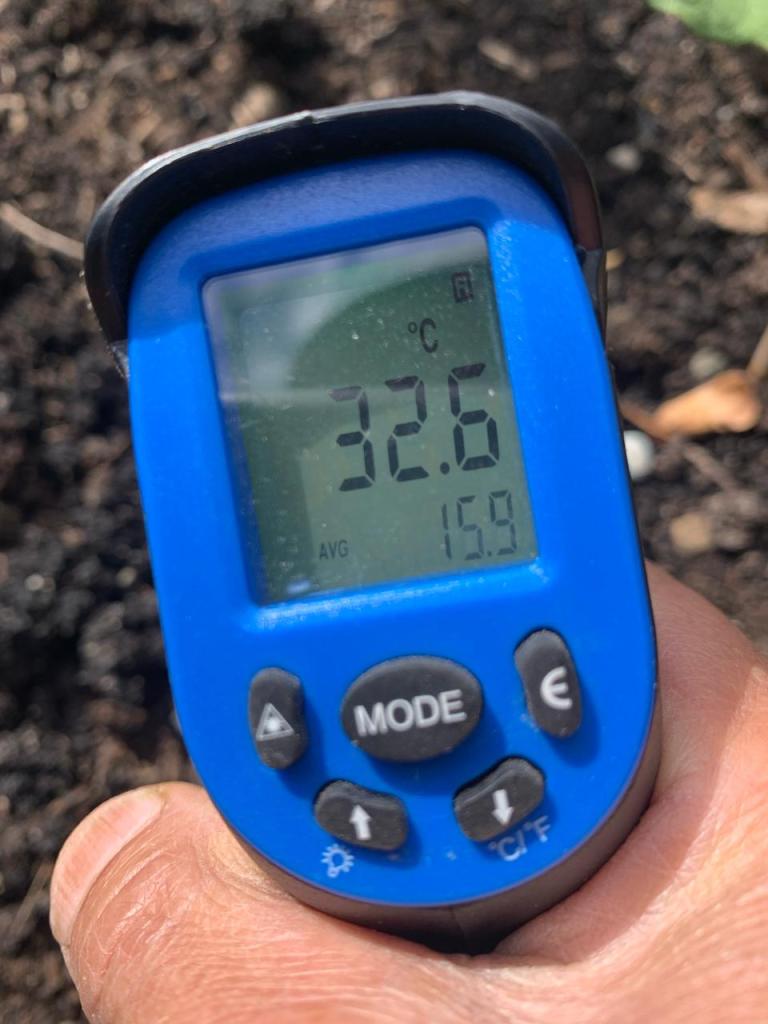
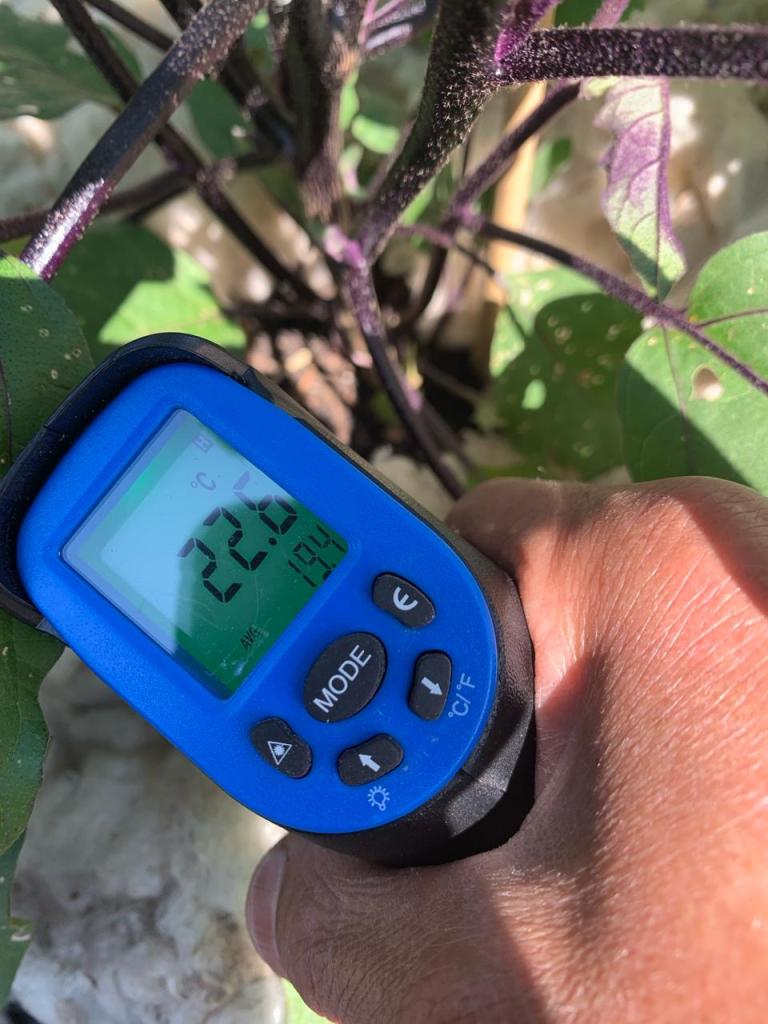
Another comparison we made was between no mulch and two different mulches, straw and raw wool, on our eggplants and we reported last week that winner was raw wool. I became curious about the reason, so at around noon on Sunday, I went and measured soil temperature on each bed. Outside temperature was about 20 degrees. The one with no mulch had 32.6 degrees under a little overcast sky and surface soil was very dry.
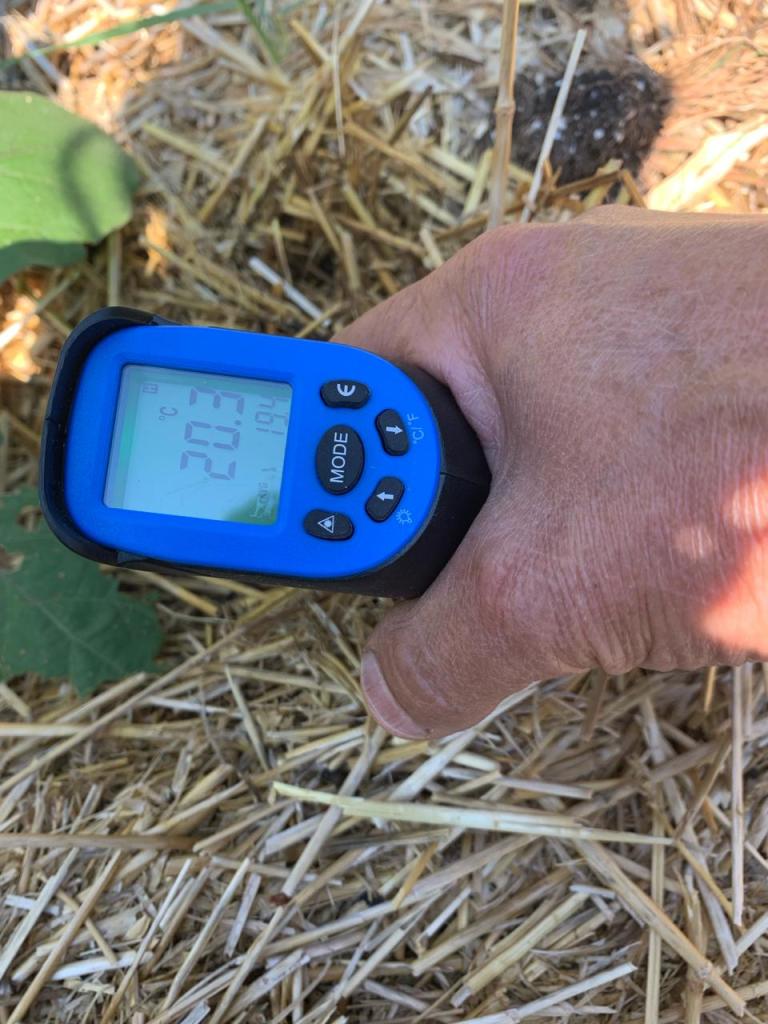
Straw mulch bed was 20.3 degrees with very moist soil.
Raw wool mulch bed was 22.6 degrees with slightly drier soil than straw mulch.
According to the book, “Soil science for gardeners” by Robert Pavlis, water in the soil makes two opposite movements, one upward by evaporation and another downward to deep in the soil by gravity. I assume both mulch will slow down evaporation and give more time to water to move downward and give plant roots more chance to grow and absorb more nutrients, and maybe raw wool gives a slight advantage of warmer soil temperature than straw mulch…. I can not tell the exact reason but eggplants we harvested from wool mulch bed last week were for sure tasty!
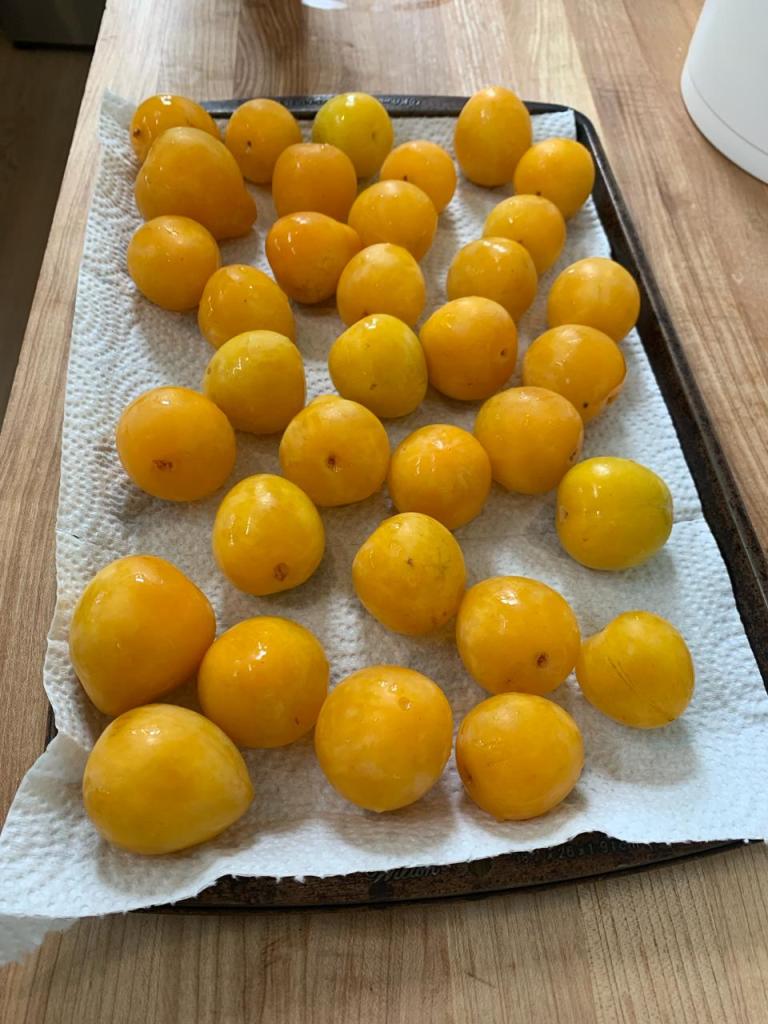
One of the things I always bring back from Japan is pickled plums called “Umeboshi”. Young green plums are pickled in lots of salt (traditionally over 18% of salt content of plum in weight) with red Shiso leaves and become very salty and sour condiment. It is a standard ingredients in Japanese rice balls “Onigiri”. Since my stock of them from last winter’s Japan trip is getting low, I decided to make some with ripe plums here. We got plums from Watercliff Farm on the island. Plums were washed, dried and put into a container with 20% salt and a weight on top.
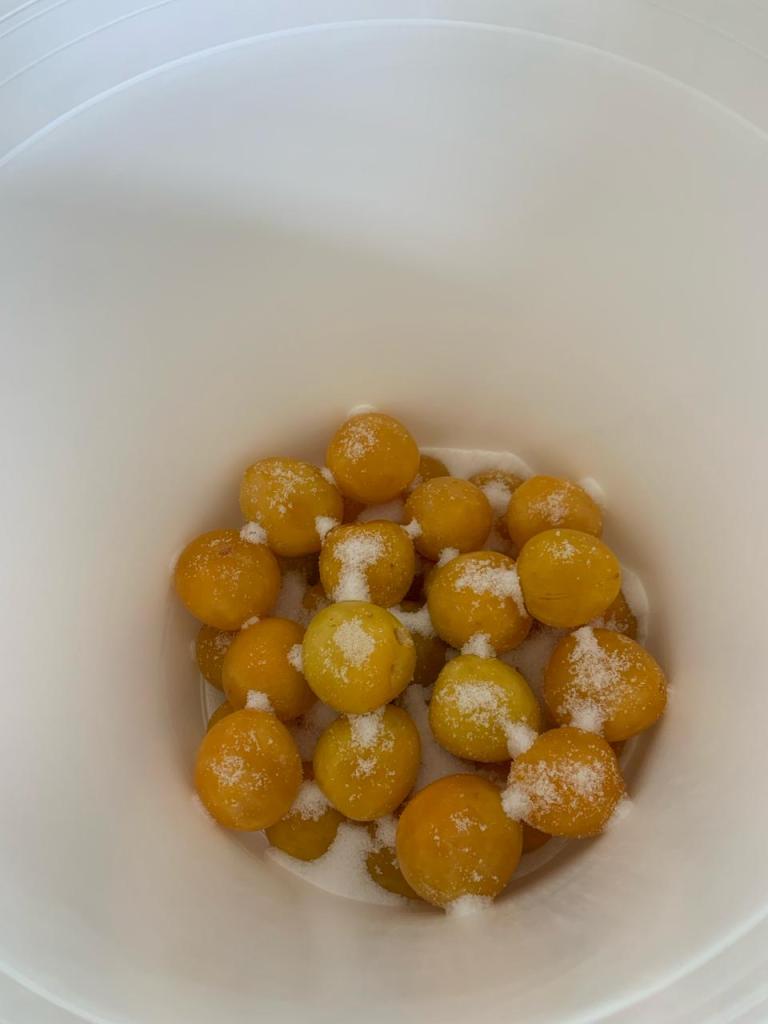
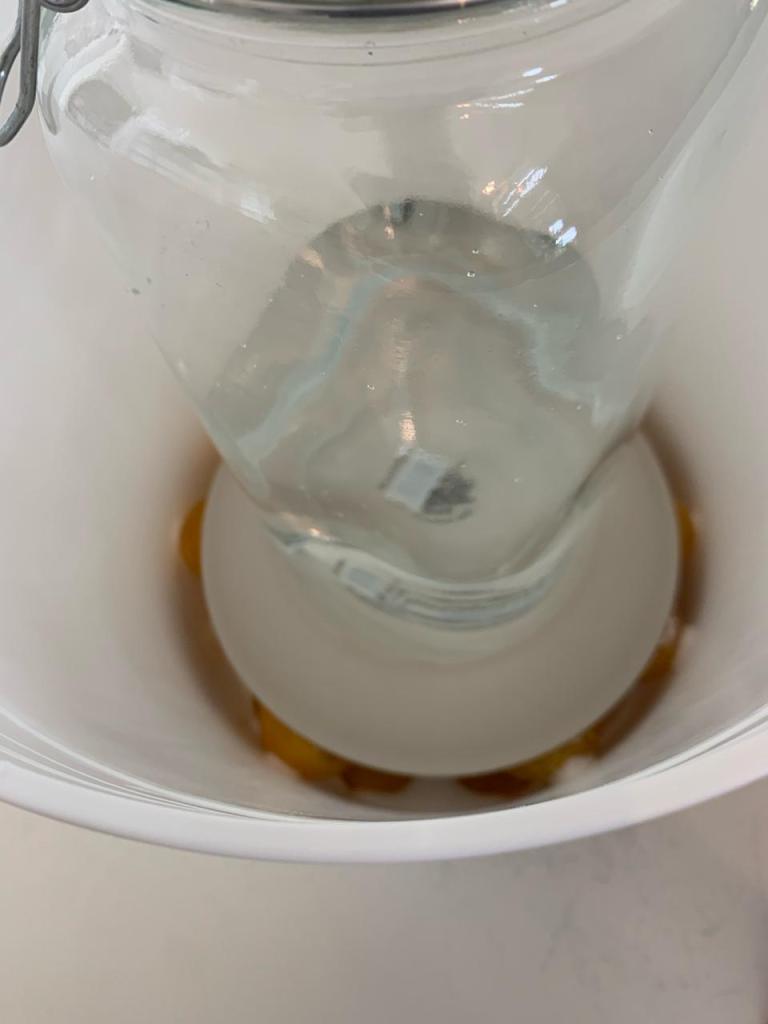
Once salt squeezes enough liquid from plum, red Shiso leaves will be added for colour and flavour, and when they are pickled enough, they will be dried outside under the sun for 3 full days before going into storage. I will write about the progress in coming weeks!
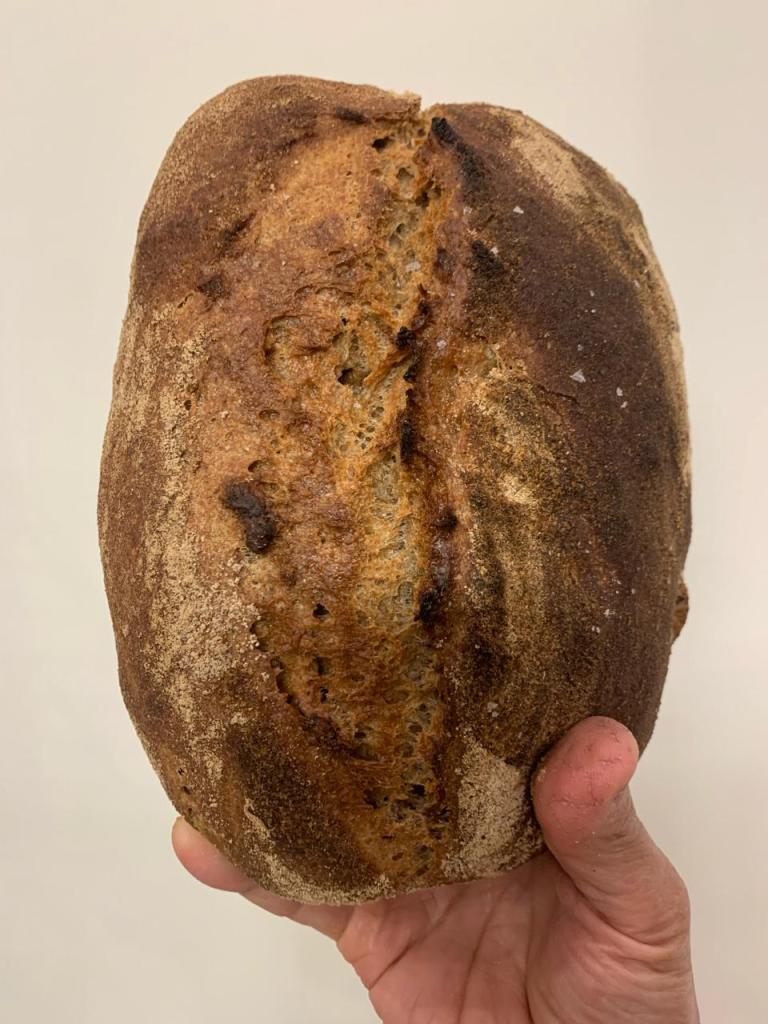
Lastly, our seasonal rosemary&walnut bread is back! For this season I changed its starter from rye to raisin based, and the result is softer and airier bread. Please see Sourdough bread page for detailed ingredients. They will be available at Gabriola Farmers Market on Saturday.
Our market schedule is as follows:
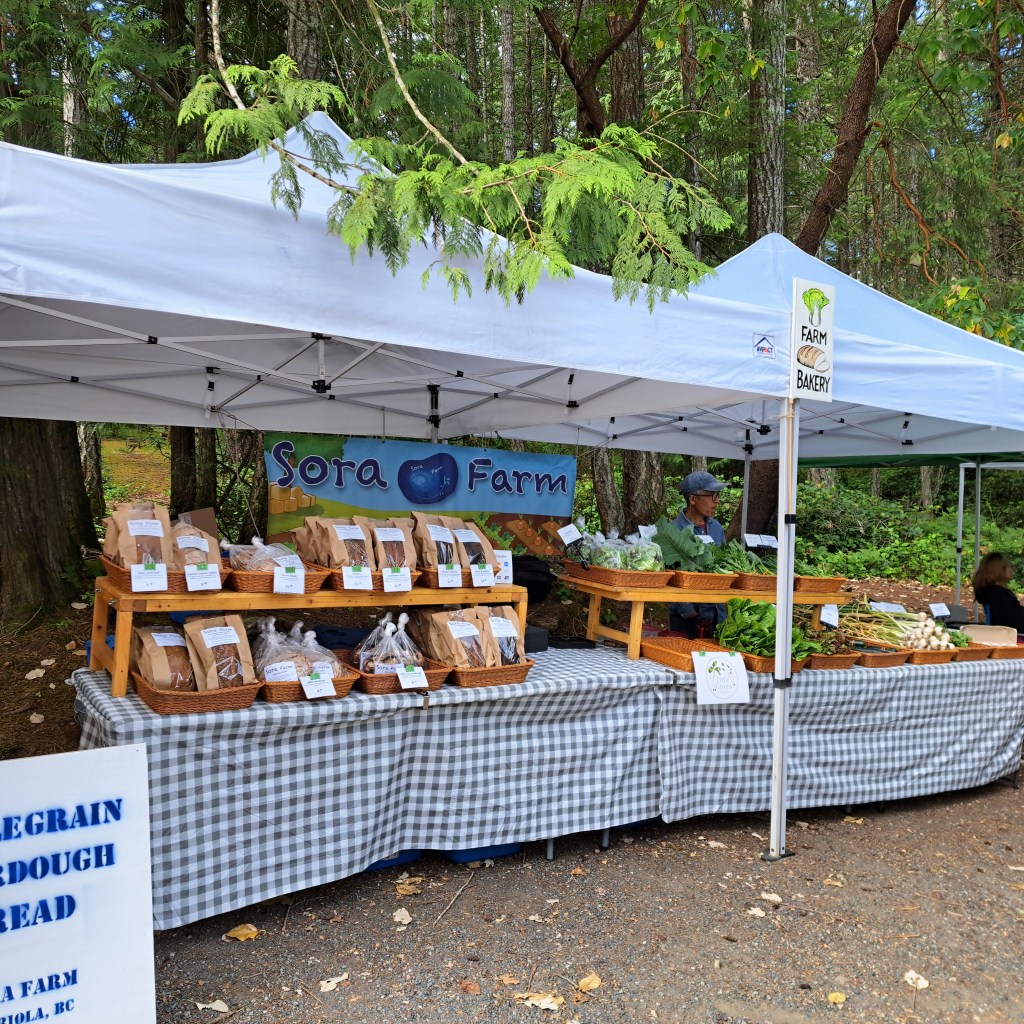
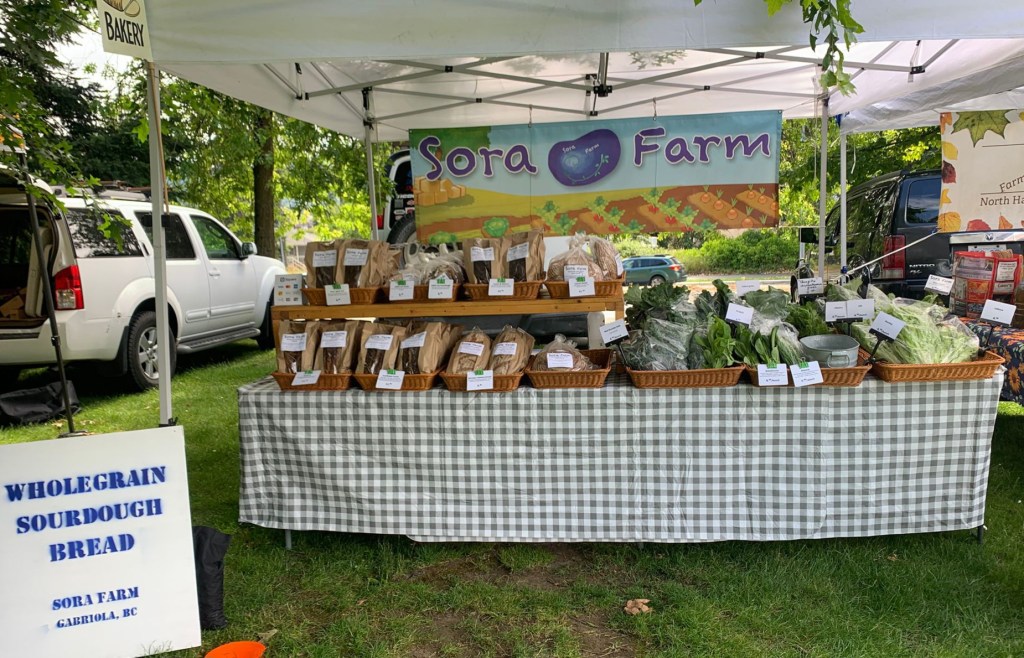
- Island Roots Farmers’ Market: Beban Park, 2300 Bowen Road, Nanaimo, 3 – 6pm on Wednesday
- AGI Market: AGI Hall, Gabriola, 10am – 2pm on Saturday
For pre-order of our sourdough bread, please click below and fill in the form, or send us an email to sorafarmveggie@gmail.com.
Thank you for reading our weekly newsletter. Have an amazing summer week!
 Sora Farm